在多线程并发读写开发中,尤其是读多写少的情况,使用读写锁代替普通mutex一般可以提升读并发度。 在多个线程频繁获取和释放读锁时,read lock count计数修改会反复触发cpu cacheline同步,导致实际性能可能达不到预期。folly SharedMutex 通过将reader信息存储在全局静态区域,来减少cacheline同步。
class structure
类定义
1
2
3
4
5
6
|
using Futex = std::atomic<std::uint32_t>;

class SharedMutexImpl {
    // 32 bits of state
    Futex state_{};
}
|
SharedMutexImpl 仅使用32位的atomic来存储读写锁内部状态
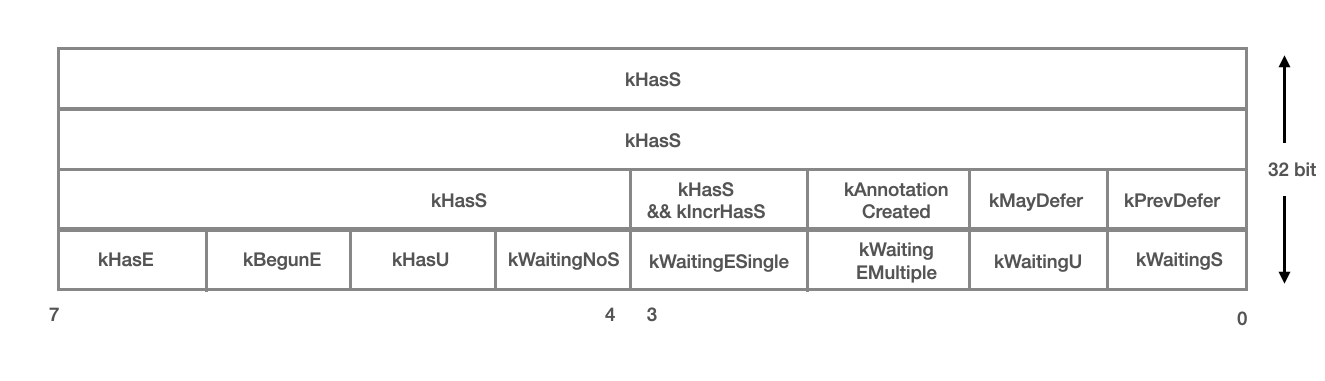 其中一些常用状态含义为(详见代码注释)
- kIncrHasS = 1 « 11, kHasS = ~(kIncrHasS - 1); 第11-31位表示shared lock计数, 每次增减 kIncrHasS。
- kHasE = 1 « 7; exlusive排它标志位
- kBegunE = 1 « 6; 开始获取写锁
- kHasU = 1 « 5; upgrade lock
- kMayDefer = 1 « 9; 是否有读锁信息存储在全局静态区
Global Shared readers
1
2
3
4
5
6
|
constexpr uint32_t kMaxDeferredReadersAllocated = 256 * 2;
static constexpr uint32_t kDeferredSeparationFactor = 4;
typedef Atom<uintptr_t> DeferredReaderSlot;
alignas(hardware_destructive_interference_size) static DeferredReaderSlot
    deferredReaders[shared_mutex_detail::kMaxDeferredReadersAllocated
      * kDeferredSeparationFactor];
|
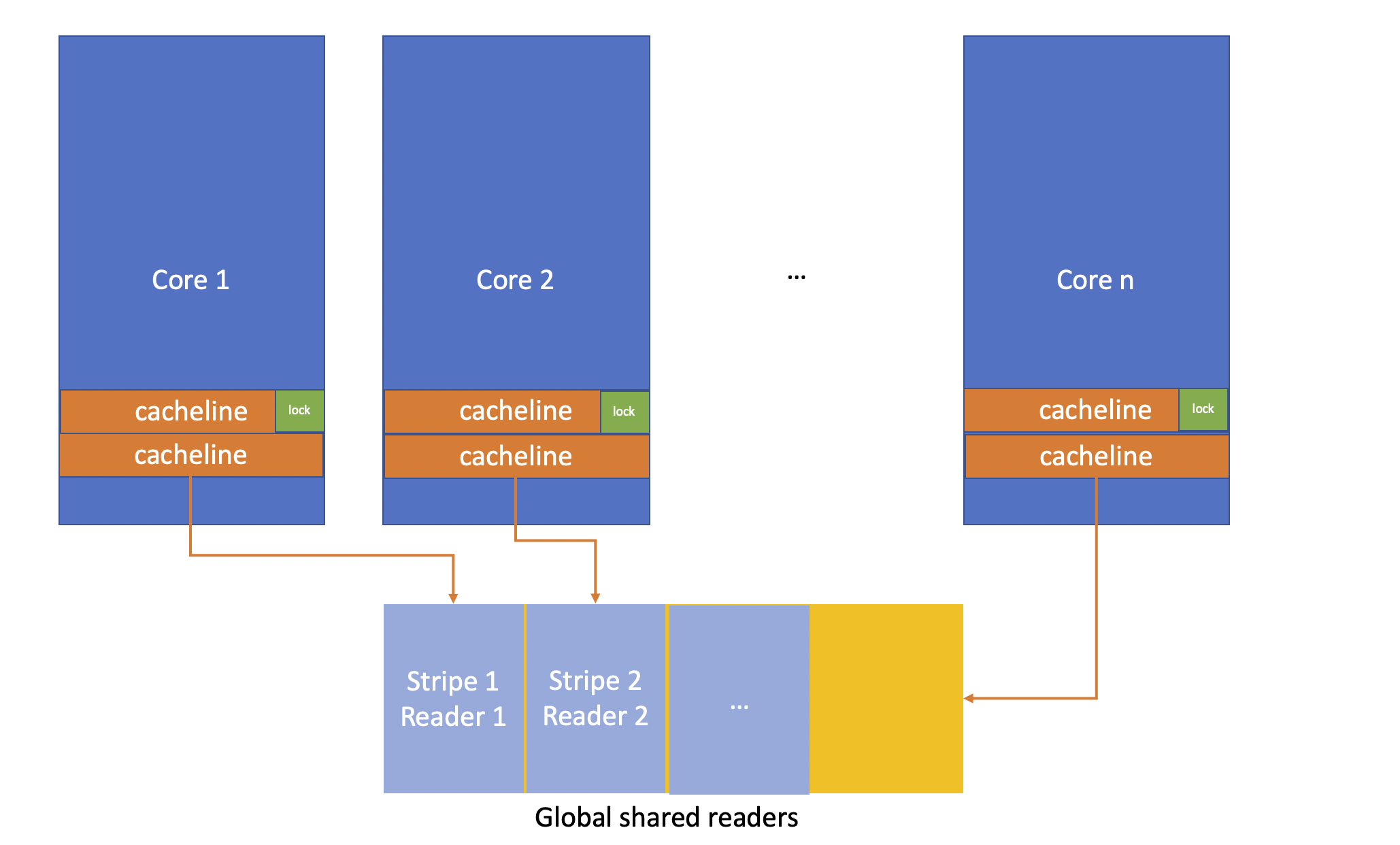
deferredReaders定义为2048个cacheline对齐的DeferredReaderSlot,uintptr_t保存SharedMutex实例唯一的token,标记当前slot关联的SharedMutex被某个线程持有reader lock。
通过将reader lock状态保存在Global Shared readers中, 避免获取和释放读锁时反复修改state_变量。 但这样也带来一些问题:
- 申请写锁时会比一般的RWMutex慢,因为需要先保证所有相关的DeferredReaderSlot释放,再去检查和修改
state_。
- 全局静态的slot数量固定(2048个), 在读并发较高或者SharedMutex实例数足够多时,slot会不够用。这时
SharedMutex退化成普通的RWMutex,读锁申请释放还是对state_加减kIncrHasS。
实现
lock_shared
 1
 2
 3
 4
 5
 6
 7
 8
 9
10
11
12
|
  template <class WaitContext>
  bool lockSharedImpl(Token* token, WaitContext& ctx) {
    uint32_t state = state_.load(std::memory_order_relaxed);
    if ((state & (kHasS | kMayDefer | kHasE)) == 0 &&
        state_.compare_exchange_strong(state, state + kIncrHasS)) {
      if (token != nullptr) {
        token->type_ = Token::Type::INLINE_SHARED;
      }
      return true;
    }
    return lockSharedImpl(state, token, ctx);
  }
|
lock_shared()主要实现在lockSharedImpl函数中, 在没有任何读写锁状态时,对state_ + kIncrHasS。
 1
 2
 3
 4
 5
 6
 7
 8
 9
10
11
12
|
bool lockSharedImpl(uint32_t& state, Token* token, WaitContext& ctx) {
  const uint32_t maxDeferredReaders =
      shared_mutex_detail::getMaxDeferredReaders();
  while (true) {
    if (UNLIKELY((state & kHasE) != 0) &&
        !waitForZeroBits(state, kHasE, kWaitingS, ctx) && ctx.canTimeOut()) {
      return false;
    }
  }
...
...
}
|
在lockSharedImpl的while loop中,如果写锁被占用,且等待超时直接return false.
其中waitForZeroBits实现过程大致为
- waitForZeroBits() 中先spin方式检查state kHasE状态清零,spin数到达kMaxSpinCount向下调用
- yieldWaitForZeroBits() 通过yield()方式尝试kMaxSoftYieldCount次
- futexWaitForZeroBits() 最后使用futex wait
接下来尝试获取读锁:
  1
  2
  3
  4
  5
  6
  7
  8
  9
 10
 11
 12
 13
 14
 15
 16
 17
 18
 19
 20
 21
 22
 23
 24
 25
 26
 27
 28
 29
 30
 31
 32
 33
 34
 35
 36
 37
 38
 39
 40
 41
 42
 43
 44
 45
 46
 47
 48
 49
 50
 51
 52
 53
 54
 55
 56
 57
 58
 59
 60
 61
 62
 63
 64
 65
 66
 67
 68
 69
 70
 71
 72
 73
 74
 75
 76
 77
 78
 79
 80
 81
 82
 83
 84
 85
 86
 87
 88
 89
 90
 91
 92
 93
 94
 95
 96
 97
 98
 99
100
101
102
103
104
105
106
107
108
109
110
111
112
113
|
  while (true) {
    if (UNLIKELY((state & kHasE) != 0) &&
        !waitForZeroBits(state, kHasE, kWaitingS, ctx) && ctx.canTimeOut()) {
      return false;
    }

    uint32_t slot = make_atomic_ref(tls_lastDeferredReaderSlot)
                        .load(std::memory_order_relaxed);
    uintptr_t slotValue = 1; // any non-zero value will do

    bool canAlreadyDefer = (state & kMayDefer) != 0;
    bool aboveDeferThreshold =
        (state & kHasS) >= (kNumSharedToStartDeferring - 1) * kIncrHasS;
    bool drainInProgress = ReaderPriority && (state & kBegunE) != 0;
    if (canAlreadyDefer || (aboveDeferThreshold && !drainInProgress)) {
      /* Try using the most recent slot first. */
      slotValue = deferredReader(slot)->load(std::memory_order_relaxed);
      if (slotValue != 0) {
        // starting point for our empty-slot search, can change after
        // calling waitForZeroBits
        uint32_t bestSlot =
            (uint32_t)folly::AccessSpreader<Atom>::current(maxDeferredReaders);

        // deferred readers are already enabled, or it is time to
        // enable them if we can find a slot
        for (uint32_t i = 0; i < kDeferredSearchDistance; ++i) {
          slot = bestSlot ^ i;
          assert(slot < maxDeferredReaders);
          slotValue = deferredReader(slot)->load(std::memory_order_relaxed);
          if (slotValue == 0) {
            // found empty slot
            make_atomic_ref(tls_lastDeferredReaderSlot)
                .store(slot, std::memory_order_relaxed);
            break;
          }
        }
      }
    }

    if (slotValue != 0) {
      // not yet deferred, or no empty slots
      if (state_.compare_exchange_strong(state, state + kIncrHasS)) {
        // successfully recorded the read lock inline
        if (token != nullptr) {
          token->type_ = Token::Type::INLINE_SHARED;
        }
        return true;
      }
      // state is updated, try again
      continue;
    }

    // record that deferred readers might be in use if necessary
    if ((state & kMayDefer) == 0) {
      if (!state_.compare_exchange_strong(state, state | kMayDefer)) {
        // keep going if CAS failed because somebody else set the bit
        // for us
        if ((state & (kHasE | kMayDefer)) != kMayDefer) {
          continue;
        }
      }
      // state = state | kMayDefer;
    }

    // try to use the slot
    bool gotSlot = deferredReader(slot)->compare_exchange_strong(
        slotValue,
        token == nullptr ? tokenlessSlotValue() : tokenfulSlotValue());

    // If we got the slot, we need to verify that an exclusive lock
    // didn't happen since we last checked.  If we didn't get the slot we
    // need to recheck state_ anyway to make sure we don't waste too much
    // work.  It is also possible that since we checked state_ someone
    // has acquired and released the write lock, clearing kMayDefer.
    // Both cases are covered by looking for the readers-possible bit,
    // because it is off when the exclusive lock bit is set.
    state = state_.load(std::memory_order_acquire);

    if (!gotSlot) {
      continue;
    }

    ...

    if ((state & kMayDefer) != 0) {
      assert((state & kHasE) == 0);
      // success
      if (token != nullptr) {
        token->type_ = Token::Type::DEFERRED_SHARED;
        token->slot_ = (uint16_t)slot;
      }
      return true;
    }

    // release the slot before retrying
    if (token == nullptr) {
      // We can't rely on slot.  Token-less slot values can be freed by
      // any unlock_shared(), so we need to do the full deferredReader
      // search during unlock.  Unlike unlock_shared(), we can't trust
      // kPrevDefer here.  This deferred lock isn't visible to lock()
      // (that's the whole reason we're undoing it) so there might have
      // subsequently been an unlock() and lock() with no intervening
      // transition to deferred mode.
      if (!tryUnlockTokenlessSharedDeferred()) {
        unlockSharedInline();
      }
      } else {
        if (!tryUnlockSharedDeferred(slot)) {
          unlockSharedInline();
        }
      }
    }
  }
|
- 18-19行: 查找可用的Slot
- 42行: 如果没有任何读锁占用或者没有空余Slot,对
state_ + kIncrHasS。
- 55行: 找到slot时,先要置kMayDefer位
- 66-68行: slot中写入Mutex唯一的信息
- 后续检查state状态,CAS失败时释放slot,下个loop重试
unlock_shared
 1
 2
 3
 4
 5
 6
 7
 8
 9
10
11
12
13
14
15
16
17
18
|
  void unlock_shared() {
    annotateReleased(annotate_rwlock_level::rdlock);

    auto state = state_.load(std::memory_order_acquire);

    // kPrevDefer can only be set if HasE or BegunE is set
    assert((state & (kPrevDefer | kHasE | kBegunE)) != kPrevDefer);

    // lock() strips kMayDefer immediately, but then copies it to
    // kPrevDefer so we can tell if the pre-lock() lock_shared() might
    // have deferred
    if ((state & (kMayDefer | kPrevDefer)) == 0 ||
        !tryUnlockTokenlessSharedDeferred()) {
      // Matching lock_shared() couldn't have deferred, or the deferred
      // lock has already been inlined by applyDeferredReaders()
      unlockSharedInline();
    }
  }
|
12-17行: 如果锁本身没有defer状态或者当前线程没有在静态区存储S锁状态,代表之前lock_shared()时对state_ 执行了+kIncrHasS,此时进入unlockSharedInline().
 1
 2
 3
 4
 5
 6
 7
 8
 9
10
11
12
|
  uint32_t unlockSharedInline() {
    uint32_t state = (state_ -= kIncrHasS);
    assert(
        (state & (kHasE | kBegunE | kMayDefer)) != 0 ||
        state < state + kIncrHasS);
    if ((state & kHasS) == 0) {
      // Only the second half of lock() can be blocked by a non-zero
      // reader count, so that's the only thing we need to wake
      wakeRegisteredWaiters(state, kWaitingNotS);
    }
    return state;
  }
|
- 2行: 执行state_ -= kIncrHasS.
- 6-10行: 如果-kIncrHasS后没有S锁状态,则唤醒等待的写锁
lock
lock()主要实现在中lockExclusiveImpl(uint32_t preconditionGoalMask, WaitContext& ctx)中,此时的preconditionGoalMask传入参数为kHasSolo = kHasE | kBegunE | kHasU
 1
 2
 3
 4
 5
 6
 7
 8
 9
10
11
12
13
|
  // Performs an exclusive lock, waiting for state_ & waitMask to be
  // zero first
  template <class WaitContext>
  bool lockExclusiveImpl(uint32_t preconditionGoalMask, WaitContext& ctx) {
    uint32_t state = state_.load(std::memory_order_acquire);
    if (LIKELY(
            (state & (preconditionGoalMask | kMayDefer | kHasS)) == 0 &&
            state_.compare_exchange_strong(state, (state | kHasE) & ~kHasU))) {
      return true;
    } else {
      return lockExclusiveImpl(state, preconditionGoalMask, ctx);
    }
  }
|
- 7-8行: 如果没有任何E锁、S锁、U锁, 则直接对state_加kHasE标志,并清空kHasU.
- 261行: 否则进入261行lockExclusiveImpl函数等待其它锁释放.
unlock
unlock实现相对简单,7行清空写标志位,第8行唤醒等待持有锁的线程。
 1
 2
 3
 4
 5
 6
 7
 8
 9
10
|
  void unlock() {
    annotateReleased(annotate_rwlock_level::wrlock);
    OwnershipTrackerBase::endThreadOwnership();
    // It is possible that we have a left-over kWaitingNotS if the last
    // unlock_shared() that let our matching lock() complete finished
    // releasing before lock()'s futexWait went to sleep.  Clean it up now
    auto state = (state_ &= ~(kWaitingNotS | kPrevDefer | kHasE));
    assert((state & ~(kWaitingAny | kAnnotationCreated)) == 0);
    wakeRegisteredWaiters(state, kWaitingE | kWaitingU | kWaitingS);
  }
|